Dolomites driving times: how far apart are the main areas?
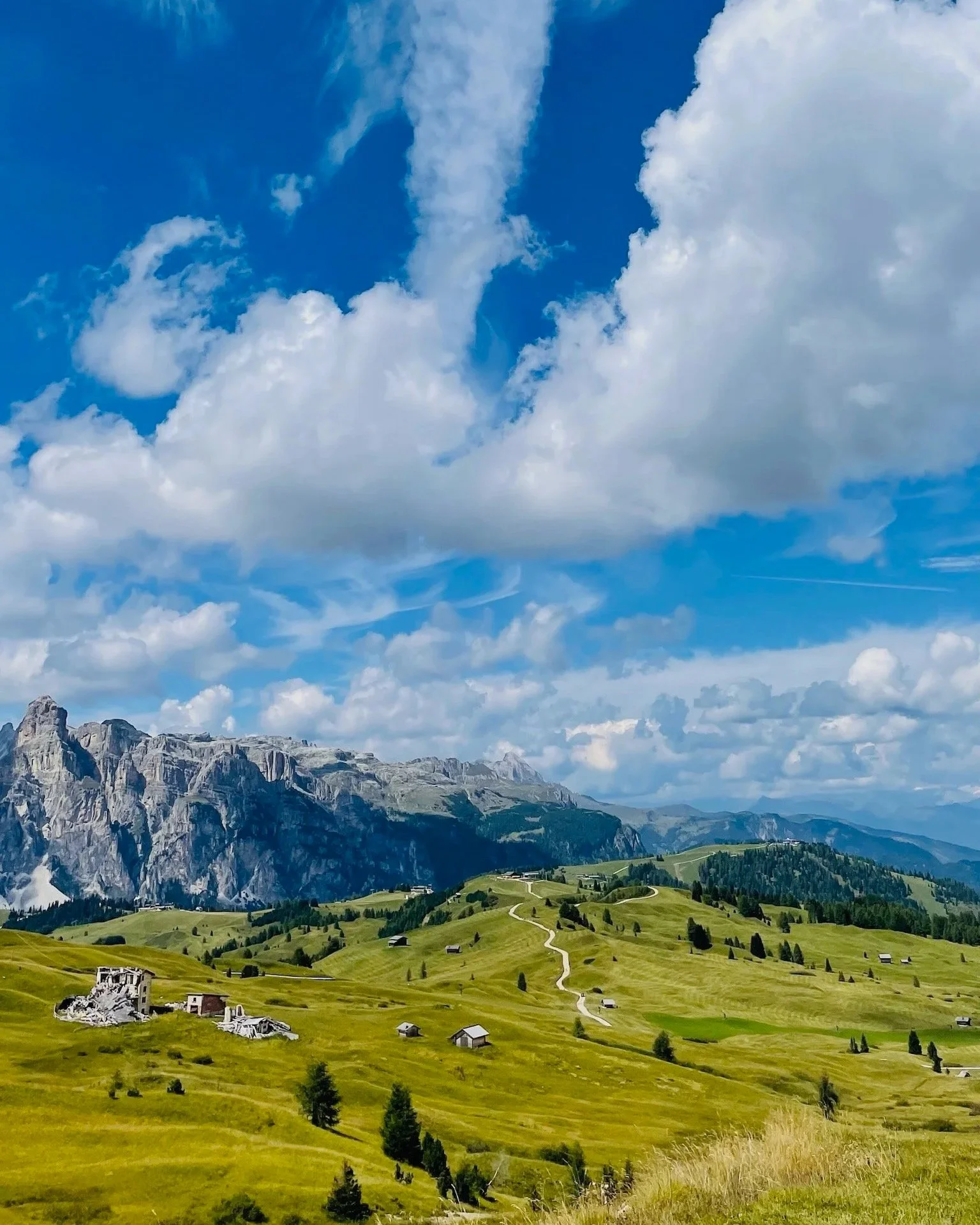
One of the easiest ways to build a bad Dolomites itinerary is to underestimate the driving.
After 16 years of traveling around the region, I rarely plan a mountain day using the driving time alone. Mountain passes, summer traffic, cyclists, parking and stops along the way all add time.
Below are realistic driving times between the main Dolomites bases and sights, plus what those distances actually mean when you are planning your days.
Then they arrive and discover that mountain geography changes everything. Underestimating driving time is one of the easiest ways to turn a first Dolomites trip into a rushed one. Understanding how long these drives really take makes a big difference to how the itinerary works.
Why mountain driving takes so much longer than it looks
The Dolomites are connected by mountain passes rather than motorways. The roads between valleys are narrow, winding, and shared with cyclists, motorbikes, and other tourists stopping suddenly to photograph the scenery. There is no straight line between anywhere.
I use Google Maps as a starting point, but I usually allow extra time for mountain roads, summer traffic, cyclists and stops along the way. A 30-minute estimate can easily turn into a longer drive once you are actually on the passes.
The other factor people underestimate is altitude change. Getting from a valley floor to a pass and down the other side takes time even on a clear road. And once you arrive somewhere, you still need to park, get oriented, and actually do the thing you came for before driving back.
Real driving times between the main areas
These are planning estimates for normal summer conditions, not guarantees. They do not include scenic stops, parking, road-access restrictions or delays during particularly busy periods.
Ortisei (Val Gardena) to Corvara (Alta Badia) - around 40 to 50 minutes via Passo Gardena. This is one of the shorter cross-valley drives and makes the two areas a natural combination.
Ortisei to Cortina d'Ampezzo - around 1 hour 15 minutes to 1 hour 30 minutes depending on the route and traffic. A full day trip from Val Gardena - possible but not something to do casually.
Ortisei to Lago di Braies - around 1 hour 15 minutes to 1 hour 30 minutes. People consistently underestimate this one. Val Gardena and the 3 Peaks area are not close.
Corvara (Alta Badia) to Tre Cime di Lavaredo - around 1 hour 15 minutes to 1 hour 30 minutes. Another cross-region drive that takes most of a morning in both directions.
Cortina to Tre Cime - around 40 to 50 minutes. The eastern Dolomites around Cortina and the 3 Peaks area are reasonably close to each other, which is why they work well as a combination.
Ortisei to Bolzano (nearest city with a major airport or train station) - around 45 minutes to 1 hour.
What this means for your itinerary
Every cross-valley day trip of 1 hour or more each way costs you two hours of driving before you have done anything. On a 5 or 7 day trip, doing two or three of those days means spending a significant portion of your holiday in the car.
This is not the end of the world if you enjoy scenic driving - and the roads between valleys are genuinely beautiful. But if you are trying to combine long drives with full days at altitude, something has to give. Usually what gives is the enjoyment.
The practical implication is straightforward: group your sightseeing by geography. Spend your first block of nights in one area and do everything within comfortable reach of it. If you move bases, move once and strategically - to an area that opens up different highlights rather than overlapping with what you have already seen.
For more on how to structure days so the driving works for you rather than against you, read my Why Your Dolomites Trip Feels Rushed post.
Choosing a base that minimizes unnecessary driving
The single most effective thing you can do to reduce driving stress is choose a base that puts you close to most of what you want to see.
Ortisei is one of the easiest bases for reducing driving on a first trip because Seceda, Alpe di Siusi and Rasciesa can all be reached directly from town.
Corvara in Alta Badia is similarly well-positioned for the central passes. Passo Gardena, Passo Sella, Passo Campolongo, and Passo Valparola are all within easy reach, and the Boè gondola lifts you directly from the village.
Both Cortina and the 3 Peaks area involve more driving to reach from the central Dolomites but work well as bases for exploring their own surrounding areas.
For a full comparison of the main bases and which one suits your priorities, download my free base guide.
Download the free Choose Your Base guide
Do you actually need a car?
For most first-time visitors the answer is yes - a car gives you the flexibility to drive passes, reach trailheads, and time your days around lift schedules rather than bus timetables.
Ortisei is one of the easiest bases for a car-free first trip, but it is not the only option. Selva, Santa Cristina and some towns in the eastern Dolomites can also work well depending on what you want to see.
For a full breakdown of when a car is essential and when you can manage without one, read my Do You Need a Car in the Dolomites post.
Want to build a route that actually makes sense?
If you want to plan it yourself, my DIY Dolomites Itinerary Toolkit helps you choose bases, compare driving times, group days sensibly by area and avoid unnecessary backtracking.
If you’d rather have me build the route for you, I also offer personalized trip planning around your dates, pace and priorities.
