What Is a Rifugio? A First-Timer's Guide
If you are planning your first Dolomites trip, you will keep seeing the word rifugio. It appears on trail maps, in hiking guides, and in almost every conversation about what to do up in the mountains. Here is everything you need to know before you go.
What a rifugio actually is
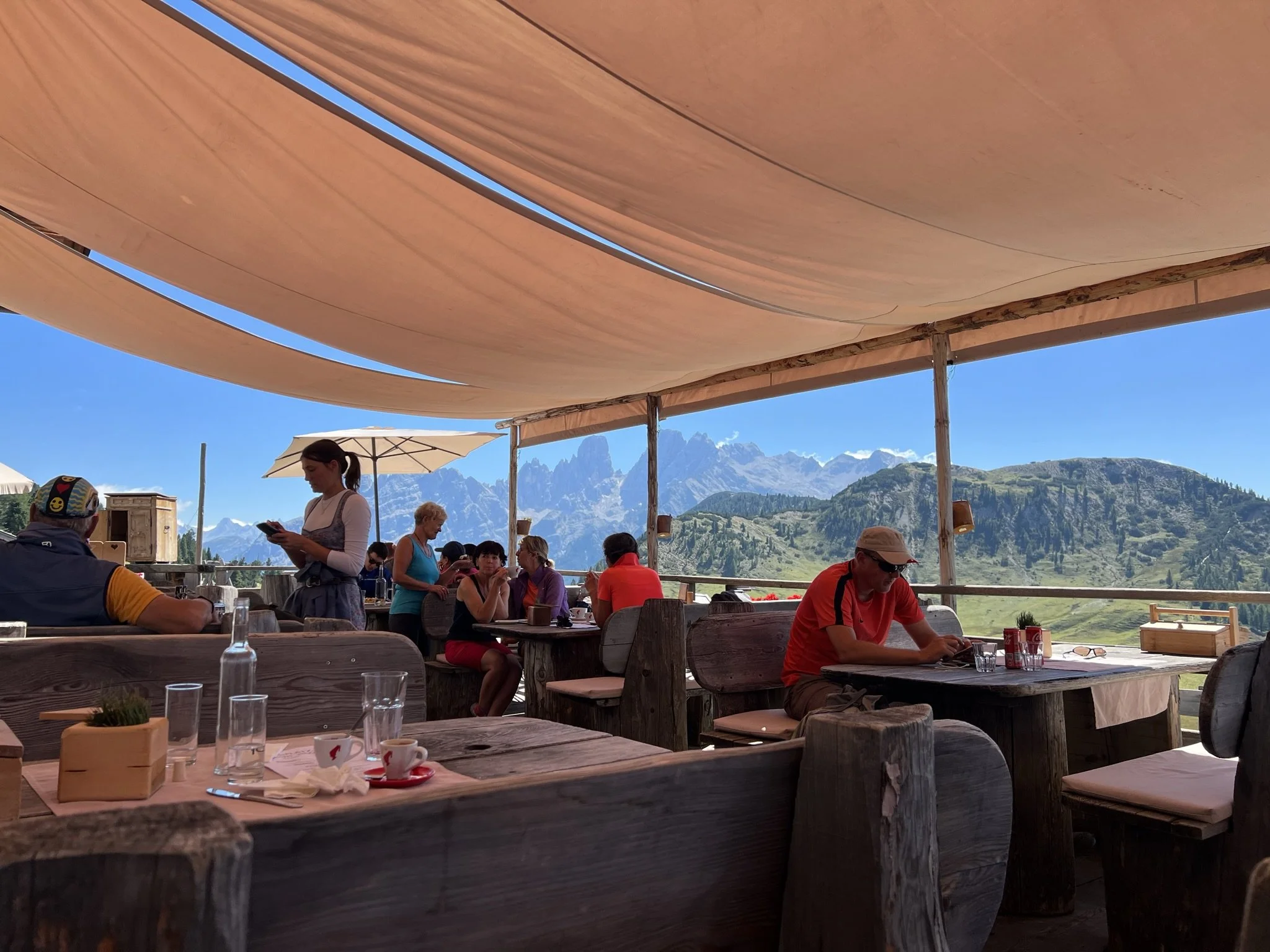
A rifugio is a mountain hut but that description undersells it considerably. These are proper buildings, often at altitude between 1800 and 2500 metres, with a kitchen, a dining room, a terrace, and usually a bar. Some have overnight beds. Most are staffed from late June through late September. They range from simple and rustic to surprisingly comfortable, but what they all share is a location that no valley restaurant can match.
The food
This is where rifugios exceed expectations for most first-time visitors. The food is proper mountain cooking, canederli (bread dumplings in broth), goulash, pasta, polenta, schüttelbrot with speck, apple strudel. It is hearty, warming, and genuinely good. Most rifugios also serve coffee, cold drinks, beer, and local wine. Eating lunch on a sunny terrace at 2200 metres with a bowl of goulash and a view that stretches for miles is one of those experiences that stays with you long after the trip.
Vegetarian options are usually available. If you have specific dietary needs, it is worth checking ahead as kitchens are small and options can be limited.
Lunch versus overnight
Most visitors experience rifugios as lunch stops during a day hike, you walk up, eat, rest, and walk down or take a lift back. This is the easiest way to enjoy them and needs no planning beyond arriving hungry.
Staying overnight is a different experience entirely. You get the mountain to yourself in the evening once the day walkers have gone, a simple dinner with other guests, and an early morning with extraordinary light before anyone else arrives. Beds are in shared dormitories or small private rooms depending on the rifugio. Bathrooms are shared. It is not luxury but it is memorable.
For a gentle introduction to the mountains that does not require a long hike, the Easy Dolomites guide covers ten viewpoints and rifugios you can reach by cable car or a short walk.
Reservations
For lunch you do not generally need to book, though in peak August season the most popular rifugios can fill up by midday. Arriving before noon is a good habit.
For overnight stays, booking is essential, especially in July and August. The best-known rifugi on popular routes fill months in advance. Book directly by phone or email; most have basic websites and some take online reservations.
For a broader breakdown of what to reserve before your trip and what can wait, read What to Book in Advance for the Dolomites.
What to expect
Rifugios are not hotels. The showers are often coin-operated, the rooms are simple, and you will be sharing space with other hikers. The atmosphere is sociable and relaxed, people are there for the same reason you are. Tipping is not expected but always appreciated. Cash is often preferred, though many now accept cards.
A few worth knowing about
Rifugio Lagazuoi above Passo Falzarego near Cortina is one of the most dramatically situated in the Dolomites and reachable by cable car, no hiking required. Rifugio Seceda above Ortisei sits right on the iconic jagged ridge and is a natural stop on one of the most walked routes in Val Gardena. Rifugio Fanes in the nature park of the same name is a favourite for overnight stays, set on a high plateau with no road access.
If you are based in Val Gardena, the free Ortisei guide includes notes on the best rifugios in the area and how to reach them. For Cortina, the Cortina guide covers the rifugios around Lagazuoi, Cinque Torri, and the Tre Cime area.
Visiting in August? My free August Dolomites Planning Guide covers booking, weather, crowds and what to pack.
Wondering how to fit a rifugio stop into your trip? Download the free Dolomites region guide for an overview of each area, or explore my trip planning services if you would like help building a full itinerary around your hiking level and travel style.
