Your first Dolomites via ferrata: what to expect
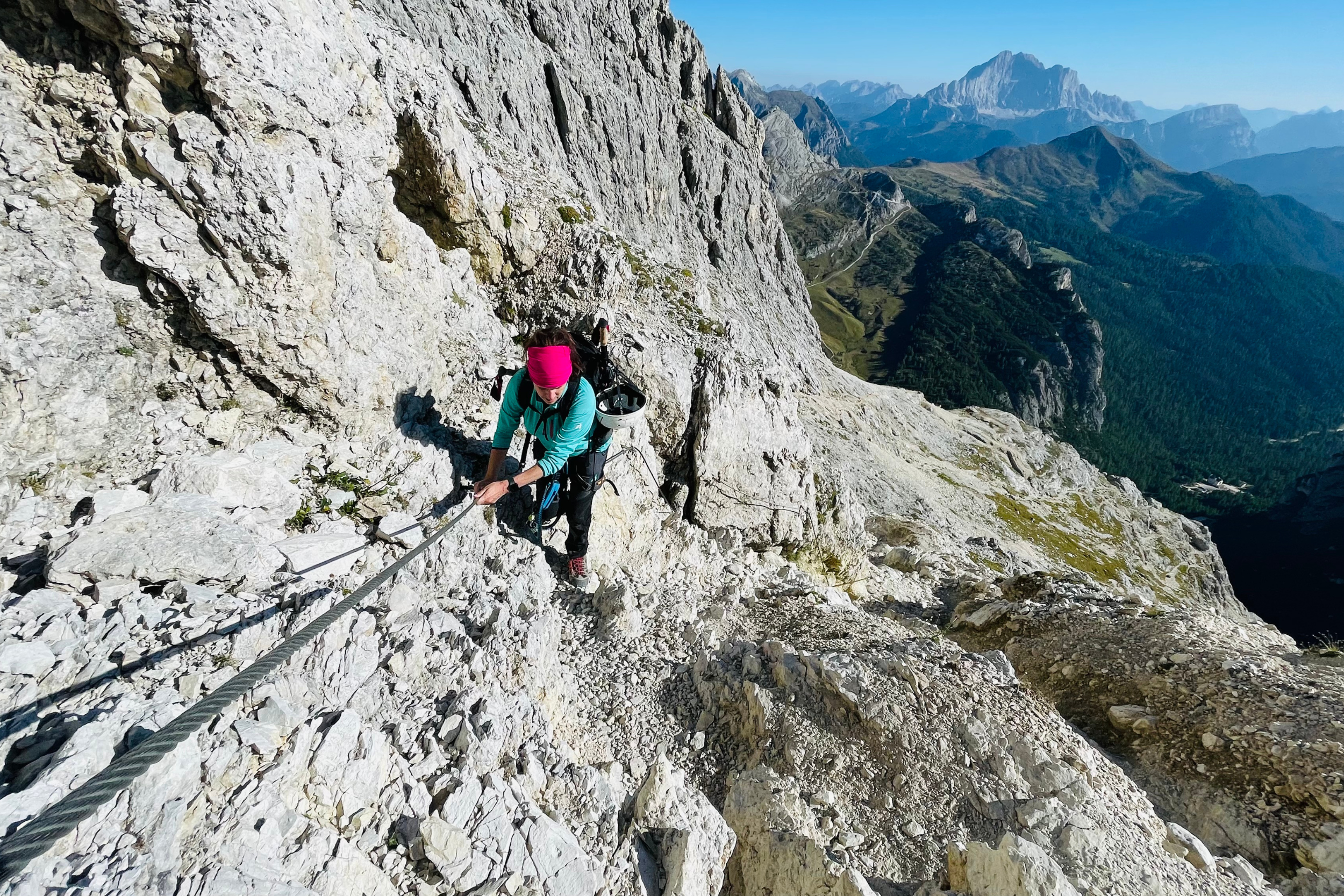
If a via ferrata is on your Dolomites wish list, don't choose your first one because the photos look exciting or a route has been labelled “easy.” Work out what the entire day involves first.
A via ferrata is a mountain route with fixed equipment such as steel cables, ladders or other aids. It can take you onto steep, exposed terrain. I've travelled in the Dolomites for 16 years, and my approach to planning a first attempt is the same as for any mountain day: understand the route, the conditions, and the way back before deciding it's right for you.
If this is your first Dolomites trip, my What Surprises First-Time Visitors About the Dolomites covers some of the things people don’t expect until they arrive, including how different hiking, lifts and mountain logistics can feel in practice.
It's more than the cable section
A route description may highlight the exciting part and barely mention the walk to reach it. Find the approach, the protected section, the descent, the total time, and the height gained and lost. A short climb can still become a tiring day if the descent is long or the approach is steep.
Also look at where the difficult sections fall. If you're uncomfortable with exposure, “easy” on a listing isn't enough information. Some routes include unprotected walking on steep terrain, and a grade doesn't tell you how you'll personally feel standing there.
This is the same principle I use when planning ordinary hiking days too: the headline distance never tells you the whole story. My How to plan a Dolomites trip guide explains how I look at the whole day rather than one attraction or hike in isolation.
What equipment do you need?
At a minimum, a proper via ferrata setup includes a climbing helmet, harness, and purpose-made via ferrata set with an energy absorber, as well as suitable footwear. Check the current equipment advice for your route and with your guide. Ordinary hiking gear alone does not replace the specialist equipment.
If you're hiring a guide, ask what gear is supplied and what you need to bring. Tell them honestly about your hiking experience and how you feel about heights. That gives them a better chance of choosing a route you'll enjoy.
For everything else you’ll need in the mountains, my Dolomites Packing Checklist includes via ferrata gear along with the clothing, footwear and daypack items I recommend for ordinary hiking and lift days.
You can also read my full Dolomites summer packing guide if you want more detail on layers, footwear and what to carry each day.
When I would hire a guide
For a first via ferrata, particularly if you haven't used the equipment or don't know how you react to exposed ground, book a qualified local mountain guide.
A guide can assess the route and conditions, teach you to use the equipment correctly, and help choose an outing suited to you.
I would also choose a guided day if the route description leaves me guessing about the approach, the descent or the level of exposure. This isn't the day to learn by following a stranger's reel.
If the weather is poor or thunderstorms are forecast, change the plan. Metal cable and exposed mountain terrain are a bad combination in a storm.
What to ask before you book
Ask the guide which route they recommend for a first attempt, how long the entire outing takes, how much walking happens before and after the cable section, and what experience or fitness they expect.
Ask where you'll meet, how you'll get back, what happens if the weather turns, and what equipment is included.
If the answers make you realise you'd rather spend the day on a hiking trail, that's a useful decision too. The Dolomites have plenty of memorable days that don't involve climbing a wall.
The aim for your first via ferrata is to finish wanting to do another.
Choose a route for your actual experience level, give yourself a full day, and leave room for the mountain to change the plan.
Want help building safer, more realistic Dolomites days?
A via ferrata is a good reminder that a Dolomites itinerary should never be built from photos alone. The full day matters: the approach, the descent, the weather, the effort level and how the route fits with everything else you are doing.
If you want to plan independently, my DIY Dolomites Itinerary Toolkit helps you think through the same practical details I use when building client trips, so your days make sense on the ground.
If you want personalized help shaping your trip, my planning services can help you choose the right bases, pace your itinerary and build a realistic structure around the kind of mountain days you want.
