How Social Media Changed the Dolomites (From Someone Who Visited Before Instagram)
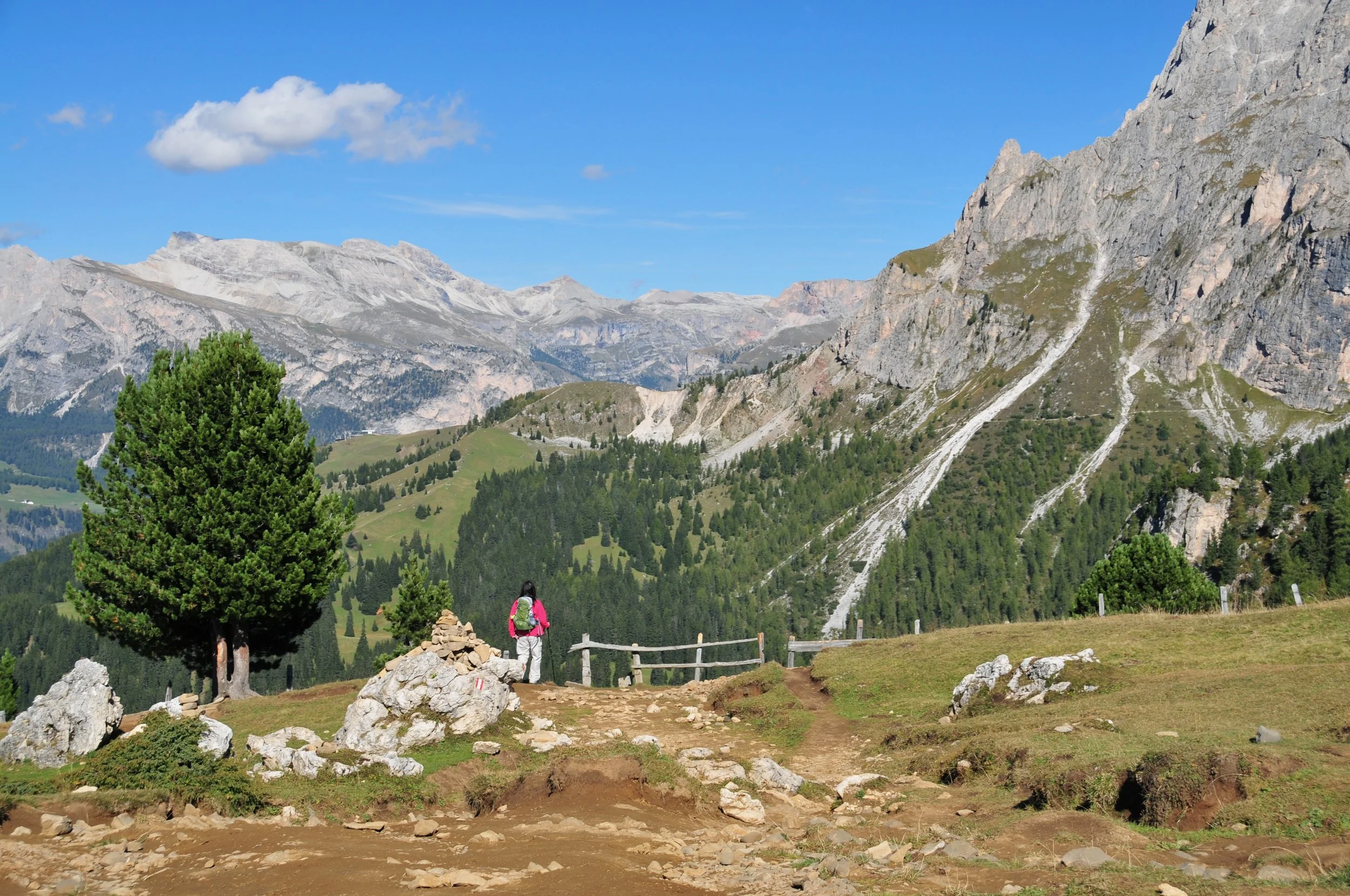
I found the Dolomites through a blog.
Not a professional travel publication. Not a guidebook. A personal blog written by a couple who travelled in a way that felt similar to how Daragh and I travelled. I had been reading their posts about Switzerland, recognising something in how they described a place, and one day I followed a link to something they had written about a region in northern Italy I had never heard of.
That was how it worked in 2010.
You found places through other people, through a slow accumulation of information, through a chain of links that might take you somewhere unexpected if you followed it far enough. There was no algorithm suggesting the Dolomites because you had searched for mountain holidays. There were no reels of someone walking the Seceda ridge at golden hour or videos telling you exactly where to stand for the perfect photograph.
There was simply a blog, a couple who wrote honestly about where they had been, and a link I happened to click.
Planning a Trip Was Completely Different
Once I had decided we were going, the research process was nothing like it is today.
The valley websites existed but were not built with international visitors in mind. Information in English was limited. I could find basic details about accommodation and a rough sense of what the region offered, but the kind of practical, first-hand advice that exists today simply wasn't available.
Today, the opposite is often true. There is so much information available that many first-time visitors don't know what to trust. That's one of the reasons I wrote about the biggest Dolomites planning mistakes, covering the issues I see people run into again and again before they even arrive.
I pieced together our trip from a handful of sources, none of them comprehensive, and arrived with a plan that had significant gaps.
We didn't know what was at the top of the Seceda cable car.
Looking back, we also didn't really understand how the cable car system worked. These days it's much easier once you know the basics, which is why I created my Dolomites Cable Cars Guide.
We didn't know why the road signs were in three languages.
We didn't know what a rifugio was or what to expect when we walked into one. If you're wondering the same thing, I've put together a guide to Dolomites rifugi that explains how they work and what to expect before your first visit.
We figured most of it out once we arrived, which was sometimes wonderful and occasionally frustrating.
The Dolomites Before Social Media
Val Gardena in 2010 was already a popular destination for visitors from Germany and Austria. It wasn't undiscovered.
But internationally it felt very different.
American visitors were relatively uncommon. Our accents often prompted genuine curiosity rather than the familiar conversations you hear today. The trails were beautifully maintained but nowhere near as busy. Seceda didn't have queues. Alpe di Siusion a summer morning felt like somewhere you had stumbled across rather than somewhere millions of people had already seen online.
The rifugios were working mountain huts first and dining destinations second. Some served wonderful food then, just as they do now, but they hadn't yet become places where reservations weeks in advance were often necessary. You walked in, found a table and enjoyed whatever was on the menu that day.
What Social Media Changed
Instagram didn't exist when we took our first trip. By the time it launched later that year, we'd already fallen in love with the Dolomites.
Over the years I watched the change happen gradually, and then all at once.
The viewpoints that barely appeared in guidebooks developed queues. Trails that once felt like discoveries became must-do attractions. Hotels that quietly impressed me years ago started booking out months in advance.
The Dolomites went from being a place people actively searched for to a place that found them through social media.
None of that is necessarily a bad thing.
More people discovering somewhere this extraordinary has helped many of the small, family-run businesses that have always been the heart of these valleys. It has also encouraged the region to think more carefully about sustainability, visitor management and protecting the places people come to enjoy.
But something else changed too.
The relationship between a traveller and a destination is different when so much of the experience has already been curated online.
When you arrive already knowing exactly which rock to stand on for the photo, exactly which cable car to take and exactly what your day is supposed to look like, some of the joy of discovery disappears before you've even arrived.
Ironically, some of my favourite memories over the past sixteen years have come from places that never became Instagram famous.
A quiet lunch at a mountain hut.
An easy walk where we barely saw another person.
A viewpoint that wasn't on anyone's must-see list.
Those moments still exist. You simply need to know where to look. That's one of the reasons I created my Easy Dolomites Guide, which highlights beautiful experiences that often receive far less attention than the famous Instagram locations.
What Has Never Changed
The morning light on Alpe di Siusi is identical to what it was in 2010.
The Odle peaks above Seceda look exactly as they did the first time I stepped off the cable car.
The silence above the valley floor, the feeling of sitting outside a rifugio with nowhere else to be and the sense of perspective these mountains give you haven't changed at all.
The Dolomites is still the Dolomites.
It has simply become harder to find the quieter version of it without knowing where to go and when to be there.
One of the biggest lessons I've learned is that slowing down almost always leads to a better experience than trying to tick off every famous viewpoint. If you'd like to travel that way too, you might enjoy my guide onHow to Experience the Dolomites Without Rushing.
That's what sixteen years of returning has given me.
Not just photographs and memories, but an understanding of how to experience these mountains beyond the places that appear on every social media feed.
And if you'd like a personalised itinerary built around your interests, pace and travel style rather than social media trends, I'd love to help. You can learn more about myDolomites Trip Planning Service here.
