Corvara, Alta Badia: the perfect base for a Dolomites trip
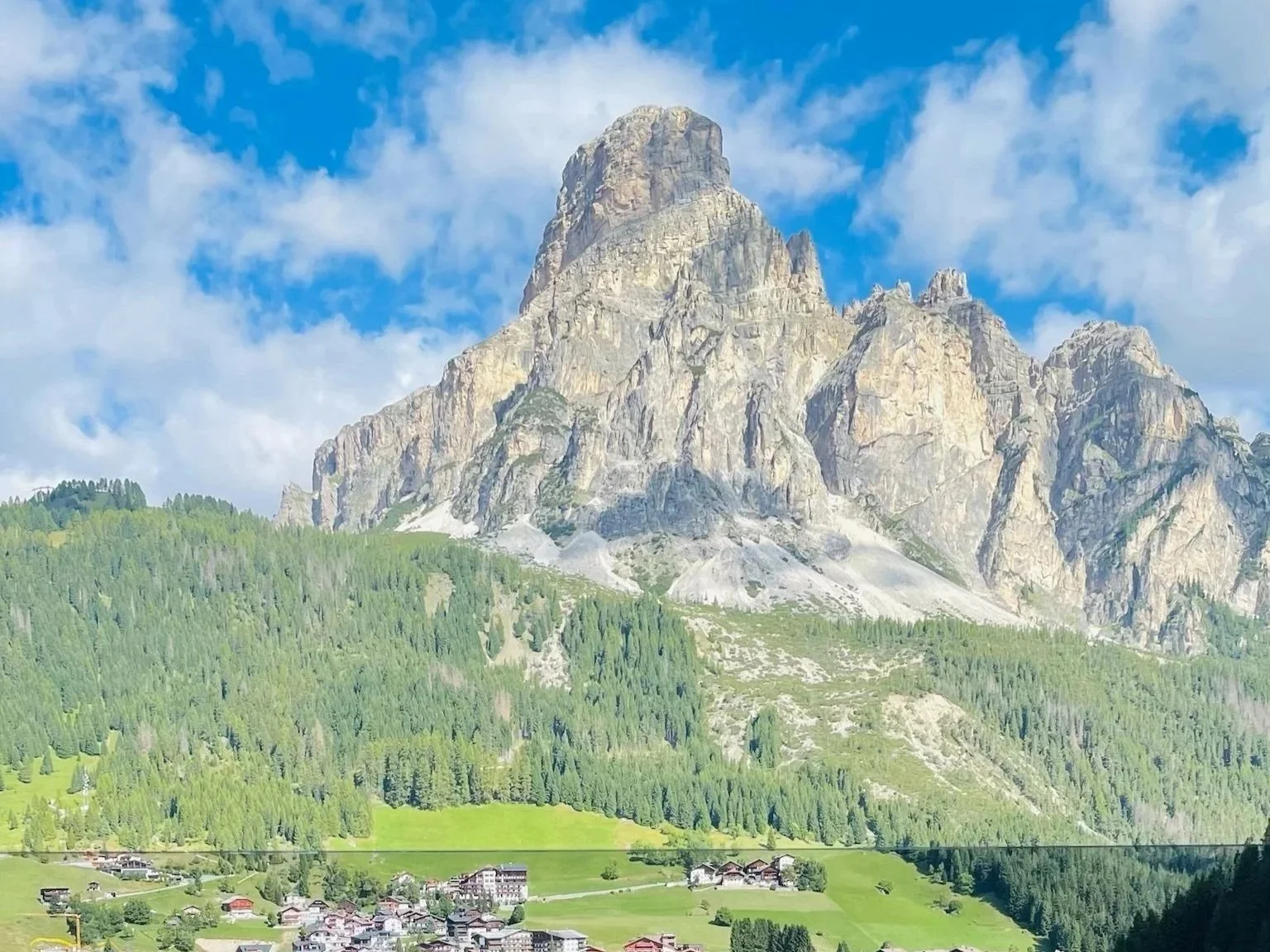
I have stayed in Corvara more times than I can count and recommended it to more clients than any other single base in the Dolomites. There is a reason for that.
It is not the most dramatic arrival in the region - the Tre Cime or Seceda make more of an immediate visual impact. But Corvara has something that matters more for a week-long stay: it works. The position is exceptional, the food is outstanding, the lift access is effortless, and the pace of the village is exactly right for a holiday that feels genuinely restorative rather than exhausting.
This guide covers everything you need to know about Corvara as a base - what to do, where to stay, where to eat, and how to plan your days.
Why Corvara works so well as a base
Corvara sits at around 1568 metres in the heart of Alta Badia, directly below the Sassongher peak which rises dramatically above the village. Its position is almost uniquely central in the Dolomites - within comfortable driving distance of Val Gardena, Cortina, the 3 Peaks area, and the great central passes.
The Boè gondola rises from the village centre toward the Sella Group, putting you at altitude within minutes of leaving your hotel. The Pralongià plateau is reachable by chairlift from the edge of the village. Passo Gardena - one of the most beautiful mountain roads in the Alps - is 15 minutes away by car.
For a detailed guide to Corvara including day-by-day itineraries, the best rifugi, and scenic viewpoints, download my free Corvara guide.
Download the free Corvara guide
What to do in Corvara
The Boè Gondola and Sella Group The Boè gondola from the village centre is the natural first day activity in Corvara. It takes you up toward the Sella Group with views that open progressively as you ascend. From the upper stations there are short walking paths, dramatic viewpoints, and easy access to several rifugi. This is a full day done properly - lift up, walk around, long rifugio lunch, lift back down.
The Pralongià Plateau The Pralongià plateau above Corvara is one of the great easy walking areas in the Dolomites. A wide, gently rolling plateau at around 2000 metres, dotted with rifugi and with views in every direction across the surrounding mountain groups. The paths are wide and flat, the distances between huts are short, and it is suitable for almost anyone. Rifugio Bioch on the plateau is one of the best lunch spots in the entire region - book ahead in peak season.
Passo Gardena The drive over Passo Gardena into Val Gardena is one of the most beautiful mountain drives in the Alps. The road climbs through increasingly dramatic scenery before reaching the pass at 2121 metres with extraordinary views of the Sella Group. Allow time for stops - there are pull-offs and small rifugi along the route and rushing through it would be a mistake.
The Sella Ronda Corvara is one of the best starting points for the Sella Ronda - the classic circuit of four passes around the Sella massif. A full day driving the loop with stops at Sass Pordoi, lunch at a rifugio on Passo Pordoi, and an afternoon drive back through Passo Campolongo is one of the defining Dolomites experiences. For more on the passes and how to plan a drive day, read my Scenic Drives guide.
Seceda Day Trip Seceda above Ortisei is around 45 minutes from Corvara via Passo Gardena and makes an excellent day trip. It is the most iconic viewpoint in Val Gardena and completely different in character from anything in Alta Badia. For everything you need to know before you go, read my Seceda guide.
Where to stay in Corvara
Corvara has a good range of hotels from comfortable mid-range options to genuine luxury spa properties. Proximity to the Boè gondola is worth prioritising - staying within walking distance of the main lift saves time every morning.
Hotel La Perla is the most iconic address in Corvara - a 5-star property with a Michelin-starred restaurant and a level of hospitality that makes it genuinely special. It is expensive but worth it for a special occasion trip.
Hotel Posta Zirm is my most recommended hotel in Corvara for first-time visitors. It sits in the best position in the village - directly adjacent to the main lifts - has a warm, unpretentious atmosphere, excellent food, and a spa area. It is where I send clients who want quality without the formality of La Perla. I have reviewed it in detail in my Posta Zirm hotel review.
Hotel Marmolada is a more design-forward option - modern alpine aesthetics, a good wellness area, and a central position. It suits people who want something a bit more contemporary in feel.
Hotel Col Alto and Hotel Villa Eden are solid mid-range options - well positioned, friendly, and good value compared to the luxury properties.
Whatever you book, check lift proximity and whether breakfast and dinner are included - half-board arrangements at good hotels in Alta Badia are often genuinely worth taking.
Where to eat in Corvara
The food in and around Corvara is one of the main reasons to come here.
La Stüa de Michil at Hotel La Perla is the headline restaurant - Michelin-starred, Ladin-focused, and genuinely exceptional. Worth booking well in advance for a special dinner.
Rifugio Bioch on the Pralongià plateau is the lunch spot I recommend above all others in Alta Badia. The terrace, the views, the food - all outstanding. Book ahead for July and August.
L'Murin in the village has a relaxed, convivial atmosphere and good food at reasonable prices. A reliable choice for an evening out without the formality of the hotel restaurants.
Pizzeria Fornella is the casual option - straightforward, good, and exactly what you want after a long day in the mountains.
For more on mountain hut lunches and the best food spots across the Dolomites, read my Dolomites Food Guide.
When to visit
Late June is one of the best times - the wildflowers are extraordinary, the passes have recently reopened, and the valley is noticeably quieter than peak summer. Hotel rates are lower and the rifugi are less crowded.
September is my personal favourite month in Corvara. Stable weather, cooler temperatures, dramatically fewer people than August, and the light on the mountains in early autumn is unlike any other time of year.
Early October brings the larch colour - the forests around Alta Badia turn gold and the whole valley looks different. Genuinely magical if the timing and lift schedules work out. Check ahead as some facilities close from mid-October.
July and August are busy and expensive but perfectly enjoyable if booked well in advance.
Practical tips
Book hotels early for July and August - the best properties in Corvara fill months in advance.
Check cable car schedules before each day - opening times vary by date and weather conditions, and some lifts have maintenance days in shoulder season.
Bring layers even in summer - temperatures drop quickly at altitude and the Pralongià plateau can feel significantly colder than the village even on a warm day.
If your hotel has a spa, book treatments at check-in - they fill up quickly at good wellness properties.
A car is strongly recommended for Corvara. The village itself is walkable but the best day trips - Seceda, Lago di Braies, the Tre Cime road, Cortina - all require driving.
Want someone to plan the full trip?
If you want a day-by-day itinerary built around Corvara - the right combination of lift days, drive days, and rifugio lunches that fits your group and your pace - that is exactly what my trip planning service is for.
Or start with the free Corvara guide if you are still in the planning stages.
