Scenic drives in the Dolomites
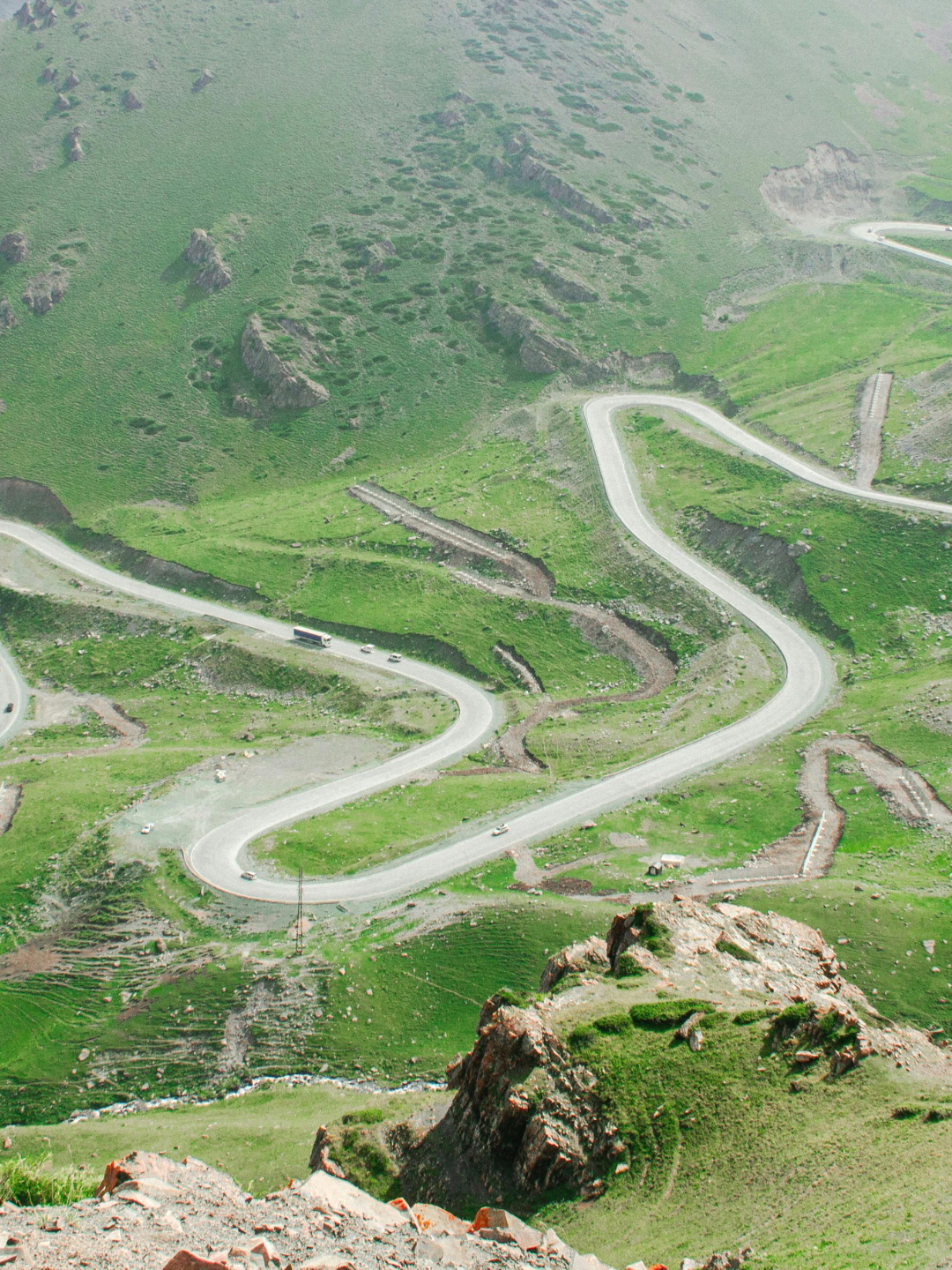
Most people assume that experiencing the Dolomites properly means long days on steep trails. It doesn't.
Some of the most dramatic landscapes in the entire region are visible from the road. The great mountain passes of the Dolomites - winding through high alpine terrain, between towers of pale rock, past meadows and rifugi and lakes - are genuinely among the most beautiful drives in Europe. A well-planned pass day with a few stops for coffee and lunch can easily be the highlight of your whole trip.
This guide covers the passes worth driving, what to expect on each one, and how to put together a day that actually works.
A few things to know before you drive
The passes are narrow in places and shared with cyclists, motorbikes, and other tourists stopping suddenly for photographs. Take your time, use pull-offs properly, and don't rush on unfamiliar roads.
Most passes close in winter and reopen from late May or early June depending on snowfall. Always check before you go if you are visiting outside peak summer season.
Early morning is the best time to drive. The light is better, the roads are quieter, and parking at popular stops is far easier before 10am.
Passo Gardena (Gardena Pass)
Passo Gardena connects Val Gardena and Alta Badia and is one of the most driven passes in the Dolomites for good reason. The road climbs out of the Val Gardena valley through increasingly dramatic terrain before reaching the pass at 2121 metres, with the Sella Group rising steeply to one side and open views across to the Puez-Odle peaks on the other.
There are pull-offs and small parking areas along the road where you can stop to take photographs or simply stand and look. The pass itself has a small rifugio - a good place for coffee before continuing down into Alta Badia toward Corvara.
This is one of the most accessible passes if you are based in either Val Gardena or Alta Badia. From Ortisei to Corvara via the pass takes around 40 minutes without stops.
Passo Sella (Sella Pass)
Passo Sella connects Val Gardena and Val di Fassa and offers some of the most dramatic close-up scenery of any pass in the Dolomites. The Sassolungo massif towers directly above the road on the Val Gardena side - a wall of pale rock rising almost vertically from the valley floor that is unlike anything else in the region.
The pass itself sits at 2244 metres and has a cluster of rifugi and a cable car station for the Sassolungo lifts. It is worth stopping here even briefly. The scale of the mountains immediately around you is extraordinary.
Passo Sella combined with Passo Gardena makes a natural loop from either Val Gardena or Alta Badia, covering two of the best passes in a single morning.
The Sella Ronda loop
The Sella Ronda is the classic Dolomites drive - a circuit of four passes around the Sella massif connecting Val Gardena, Alta Badia, Val di Fassa, and Val Badia. The four passes are Gardena, Campolongo, Pordoi, and Sella, and driving the full loop with stops takes a comfortable full day.
This is the single best introduction to the Dolomites for anyone doing a scenic drive. You see four distinct valleys, four different perspectives on the central massifs, and have multiple options for stopping at rifugi for lunch along the way. Sass Pordoi, reached by cable car from Passo Pordoi, is one of the best high-altitude viewpoints in the entire region and sits directly on the route.
If you only have time for one big drive day, make it this one.
Not sure which base puts you in the best position for this route? My free base guide compares Val Gardena, Alta Badia, Cortina, and the 3 Peaks area so you can choose before you book.
Download the free Choose Your Base guide
Passo Giau
Passo Giau is one of the most photographed passes in the Dolomites and the views justify the reputation. The road climbs above Cortina d'Ampezzo to 2236 metres through increasingly open terrain, with the Nuvolau and Ra Gusela peaks dominating the skyline and wide meadows on either side of the road near the top.
This area is also close to Cinque Torri, which can be reached by chairlift, covered in full in the Dolomites cable cars guide.
Simply stopping at the pass gives you one of the great panoramic views of the region. On a clear day the sight of the surrounding peaks - with nothing between you and the horizon - is genuinely breathtaking.
Passo Giau is also close to Cinque Torri, where a chairlift brings you up to a remarkable landscape of rock towers with exceptional views back toward Cortina. The two work very well together as a half-day from Cortina.
Passo Falzarego and Valparola Pass
These two passes sit side by side and are best driven together. Passo Falzarego is the larger and better-known of the two - the cable car here rises to Lagazuoi at 2752 metres, one of the highest and most dramatic viewpoints in the Dolomites and reachable without any hiking. The views from the Lagazuoi terrace on a clear day stretch across the entire Ampezzo basin.
Valparola Pass, just above Falzarego, is quieter and has a different character. The road passes the ruins of a World War I fortress - the Dolomites were a front line during the First World War and the fortifications here are a striking reminder of that history. A small alpine lake, Lago di Valparola, sits near the pass and is worth a brief stop.
Together these two passes connect Alta Badia and Cortina and make a natural route if you are travelling between the two areas.
The Tre Cime road
The road to Rifugio Auronzo below the Tre Cime di Lavaredo is one of the most famous drives in the Dolomites - and one of the most dramatic. The toll road climbs high into the mountains above Misurina with views of the Three Peaks themselves appearing on the horizon as you ascend.
From the car park at the top, the Three Peaks are a short walk away and the panorama of the surrounding Sexten Dolomites is unlike anywhere else in the region. This is best visited early - the car park fills fast in summer and the road is subject to timed entry restrictions at peak times. Aim to arrive before 8am if possible.
The nearest bases for this area are Sesto and San Candido, both relaxed and well-positioned for the eastern Dolomites.
Putting together a scenic drive day
The mistake most visitors make is trying to do too many passes in one day. Three passes with proper stops is a full day. Two passes done slowly, with a rifugio lunch and time to actually look at the scenery, is often better.
Think about where you are staying and build the route outward from there rather than trying to cross the entire region. The Dolomites are bigger than they look on a map and driving times between valleys are longer than they appear.
One of the biggest mistakes on drive days is trying to cover too much in one go. My free guide explains how to structure your trip so every day feels enjoyable rather than exhausting.
Download the free Dolomites Without the Rush guide
For help understanding how the different areas connect and which passes are most relevant to your base, read my Dolomites Driving Times post.
For the best easy viewpoints to combine with a drive day, read Dolomites Day Trips Without Long Hikes.
Free guide: choose your Dolomites base
Which passes you can realistically drive in a day depends entirely on where you are staying. This free guide compares the main base areas and helps you choose the right one for your trip.
Download the free Choose Your Base guide
Want someone to plan the full itinerary?
Knowing which passes to drive is one thing. Knowing how to fit them into a realistic day alongside cable cars, rifugio lunches, and the other highlights on your list is another.
That is what my trip planning service is for. I work with your dates, your base, and your priorities to build a clear plan that takes the guesswork out completely.
Or start with the free base guide if you are still deciding where to stay.
