Dolomites Cable Cars Guide: How to Use Lifts for Incredible Views
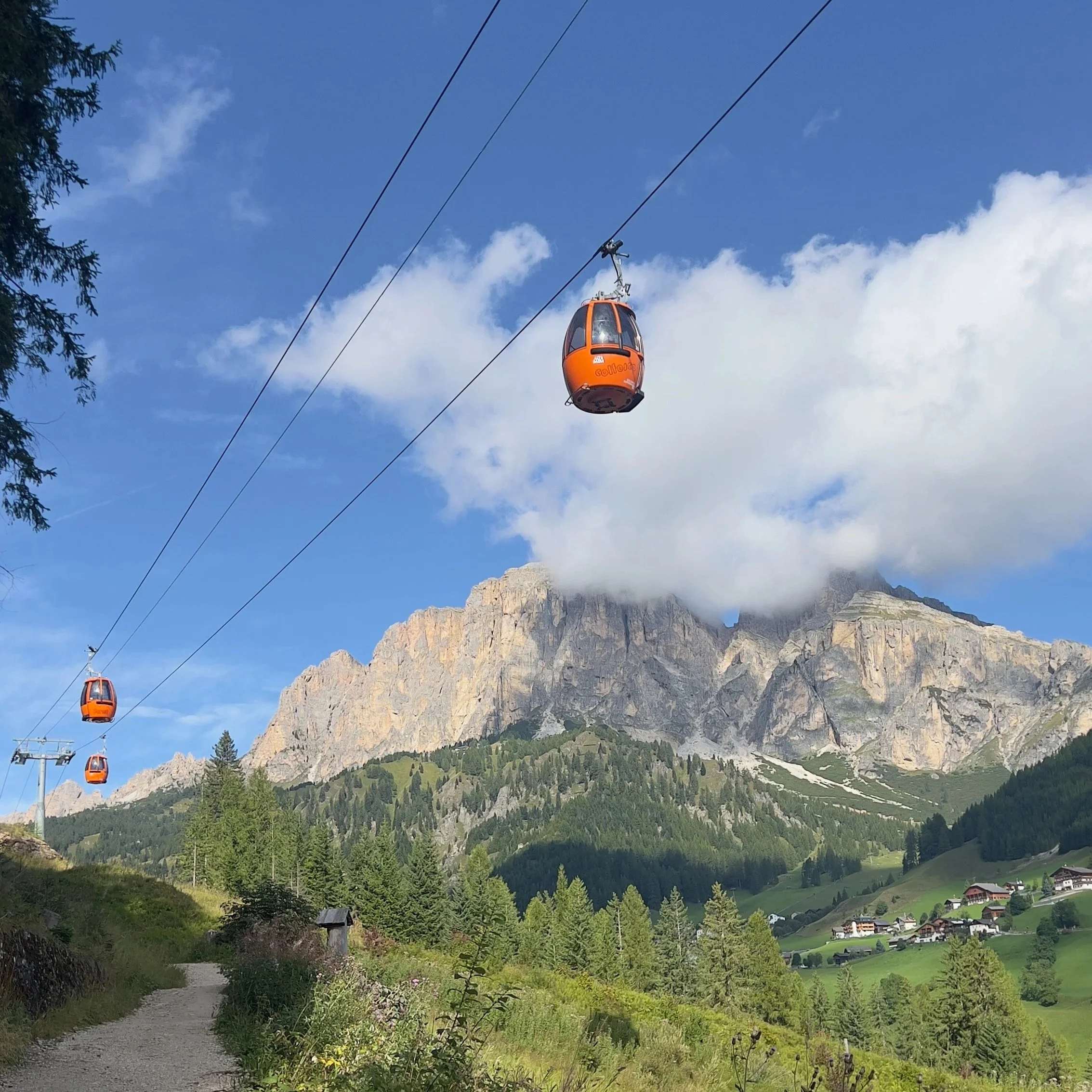
There is a common assumption that experiencing the Dolomites properly means long days on steep trails. The reality is very different.
The Dolomites have one of the most extensive lift networks in the Alps. Cable cars, gondolas, and chairlifts connect valley towns to high alpine terrain across the entire region, putting some of the most dramatic scenery in Europe within reach of almost any visitor. The most iconic viewpoints - places that take hikers hours to reach on foot - are accessible in minutes.
This guide covers the best cable cars in the Dolomites, what each one offers, and how to use them to build a genuinely spectacular trip without committing to long hikes.
How the Lift System Works
There are three main types of lift you will encounter in the Dolomites.
Gondolas are large enclosed cabins that run continuously between stations - you step on as they move slowly through a boarding area, similar to a ski gondola. They carry 8 to 15 people at a time and are the most common type of lift for reaching high viewpoints from valley towns.
Cable cars are larger cabins - sometimes carrying 50 to 100 people - that travel back and forth between two fixed stations on a cable. They tend to cover more vertical distance and reach higher altitudes than gondolas.
Chairlifts are open-air seats on a moving cable. They are more common at mid-altitude and in ski areas. In summer they provide access to plateaus and mid-mountain areas where the hiking is gentler.
Most lifts in the Dolomites operate from late May or early June through to early or mid-October, with exact dates varying by area and snowfall. Always check opening dates before you go, particularly if visiting outside July and August.
For a quick reference guide to all the key cable cars in the Dolomites - including prices, opening times, and what to expect at the top of each one - download my free cheat sheet.
Download the free Cable Car Cheat Sheet
Seceda, Val Gardena
The Seceda lift system above Ortisei is one of the most spectacular in the Dolomites. Two lifts - a gondola from the town centre to Furnes, then a cable car to the Seceda plateau - bring you to 2500 metres in around 15 minutes.
From the top, the famous ridgeline of the Odle peaks stretches along the horizon. The main viewpoint is a 10 to 15 minute walk from the upper station on a flat, well-marked path. The scenery here is extraordinary and the effort required is minimal.
In 2026, Seceda has introduced a timed-entry booking system for the main lift. Two-thirds of capacity is bookable online in advance - worth doing in July and August, or on any weekend in peak season. Tickets for adults are 74 euros return, 49 euros one way.
For a full guide to visiting Seceda including timing, what to wear, and how to make the most of the day, read my Seceda guide.
Alpe di Siusi (Seiser Alm), Val Gardena
The cable car from Ortisei to Alpe di Siusi brings you to Europe's largest high-altitude alpine meadow - a vast, flower-covered plateau at around 2000 metres with the Sassolungo and Langkofel groups rising dramatically at one end.
This is one of the most peaceful and accessible areas in the Dolomites. The paths across the plateau are wide and gentle, the distances between rifugi are short, and the scenery changes constantly as you move across the meadow.It is ideal for people who want to spend time in the mountains without any of the stress of steep or technical terrain. For ideas on how to build a full day up here, see the guide to Easy Walks in the Dolomites.
The cable car from Ortisei runs frequently and the plateau is also accessible by road from the Siusi side, though cars are restricted in peak season. Going by lift from Ortisei is the simplest option for most visitors.
Lagazuoi, Cortina d'Ampezzo
The Lagazuoi cable car rises from Passo Falzarego to 2752 metres - one of the highest points reachable by lift in the Dolomites. The views from the top are extraordinary in every direction: the Ampezzo Dolomites to the east, the Marmolada glacier to the south, the Tofane group across the valley, and on a clear day the pale wall of the Dolomites stretching to the horizon.
There is a rifugio at the summit for lunch or coffee, and a network of paths for those who want to walk. For those who don't, simply sitting on the terrace and taking in the panorama is reason enough to come.
Lagazuoi works beautifully combined with a drive over Passo Giau nearby - both can be done in a single day from Cortina. For more on building a day around scenic drives and lifts in this area, read my Scenic Drives guide.
Sass Pordoi, Val di Fassa
The cable car from Passo Pordoi reaches 2950 metres on the southern edge of the Sella Group - the highest lift-accessible viewpoint in the central Dolomites. The plateau at the top is a remarkable lunar landscape of pale rock with views that stretch across the entire region.
The walking here is very gentle - the terrain at the top is wide and relatively flat - and the sense of altitude and scale is unlike anywhere else accessible by lift in the Dolomites. This is a genuine highlight and one that is often underestimated by first-time visitors.
Passo Pordoi sits on the Sella Ronda circuit, making Sass Pordoi a natural addition to a scenic drive day around the central passes.
Cinque Torri, near Cortina
A chairlift from near Passo Falzarego brings you up to the Cinque Torri - five extraordinary rock towers rising from the alpine meadow above Cortina. Short, flat paths loop around the towers and the views back toward the Tofane group and across the Ampezzo valley are exceptional.
There is a wonderful rifugio here for lunch, and the area also has a fascinating open-air World War I museum built into the rocks - the Dolomites were a front line during the First World War and the fortifications around Cinque Torri are some of the best preserved in the region.
This works very well combined with the Lagazuoi cable car, as both are located close to Passo Falzarego. If you are planning a day in this area, the scenic drives guide covers Passo Giau and Valparola nearby.
Boè Gondola, Corvara (Alta Badia)
From the centre of Corvara, the Boè gondola lifts you toward the Sella Group with wide views opening up across Alta Badia as you ascend. From the upper stations there are rifugi, easy walking paths, and dramatic views across multiple mountain groups.
This is one of the most convenient lift systems in the Dolomites for anyone based in Alta Badia - you can be at altitude within 15 minutes of leaving your hotel. The Pralongià plateau, also reachable from Corvara by a separate chairlift, is another excellent option for gentle high-altitude walking with panoramic views in every direction.
For more on Corvara as a base and what to do in the Alta Badia area, read my Alta Badia for First-Timers guide.
Practical Tips for Using Cable Cars
Go early. The first lifts of the day are always the quietest. By mid-morning queues build at the most popular stations, particularly Seceda and Alpe di Siusi in peak season.
Check the weather before you go. There is no point paying for a lift ticket if the peaks are buried in cloud. Most lift companies have webcams on their websites - check the morning of your visit before heading out.
Bring layers. Even in July and August, temperatures at 2500 metres are significantly cooler than in the valley. A light jacket and something windproof will make the day much more comfortable.
A full day, lift up, walk around, rifugio lunch, walk back, lift down, is almost always better than rushing. See Best day trips without long hikes for how to structure a full cable car day. The temptation is to treat a cable car visit as a quick half-day. The areas at the top of the best lifts deserve more time than that. A full day - lift up, walk around, rifugio lunch, walk back, lift down - is almost always better than rushing.
Book in advance where possible. Seceda now requires advance booking in peak season. Other lifts may introduce similar systems. Check before you go.
Free Guide: Cable Car Cheat Sheet
All the key cable cars in the Dolomites in one place - prices, opening times, what to expect at the top, and which ones are worth prioritising for a non-hiking trip.
Download the free Cable Car Cheat Sheet
Want Someone to Build the Full Plan?
Knowing which cable cars are worth doing is one thing. Knowing which ones to combine, how to fit them into a realistic day alongside scenic drives and rifugio lunches, and which ones are most relevant to where you are staying is another.
That is what my trip planning service is for. I work with your group, your dates, and your priorities to build a clear plan that takes the guesswork out completely.
Or if you are still in the early stages, start with the free cheat sheet.
