Dolomites trip costs: what to budget (3–7 days)
The Dolomites can be surprisingly affordable or genuinely expensive depending on where you stay, when you visit, and how you structure your days. The range between a budget-conscious trip and a luxury one is enormous - and the difference between peak season and shoulder season pricing can be 30 to 40 percent on accommodation alone.
This guide gives you realistic cost breakdowns based on actual spending rather than averages pulled from booking sites, so you can plan your budget with confidence before you book.
Accommodation
Accommodation is the biggest variable in a Dolomites trip budget and the one where the range is widest.
At the luxury end - Hotel La Perla in Corvara, Hotel Adler in Ortisei, Hotel Quelle near Villabassa - expect to pay 420 to 750 euros per night for a double room, sometimes more in peak season. These properties typically include exceptional spa facilities, outstanding food, and levels of service that justify the price for a special trip.
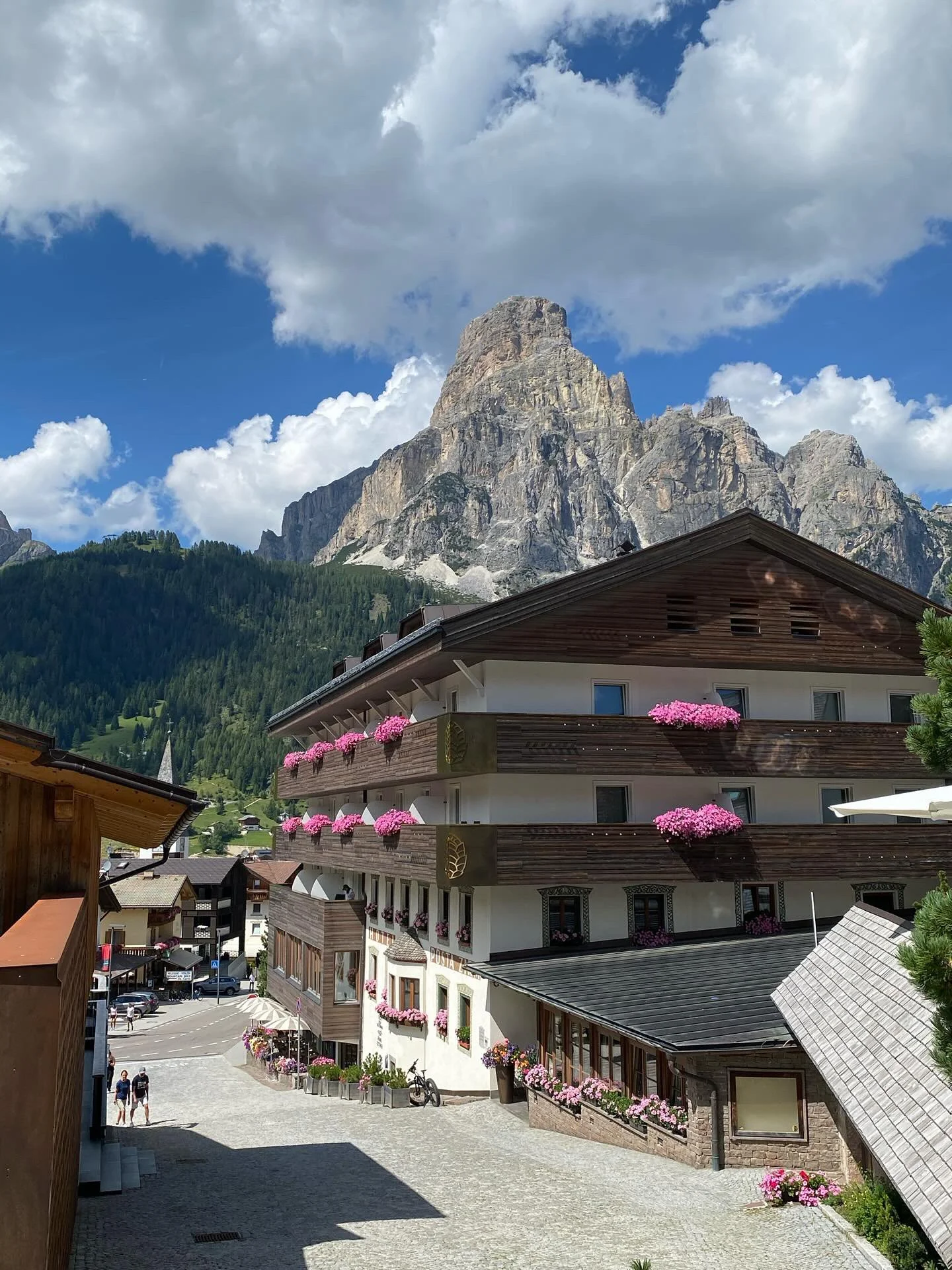
Mid-range hotels - comfortable 3 and 4 star properties with good facilities, often including half-board - typically run 180 to 350 euros per night. This is where most first-time visitors land and there is excellent value to be found at this level. Hotel Posta Zirm in Corvara and Hotel Linder in Selva are both strong examples.
Apartments and more budget-oriented hotels - particularly in towns like Dobbiaco, San Candido, and Santa Cristina - run from around 90 to 160 euros per night. These suit people who prefer self-catering and more flexibility over hotel facilities.
The most expensive bases are Cortina, Corvara, and Ortisei. Slightly lower prices are generally found in Santa Cristina, La Villa, Sesto, and the smaller villages that sit just outside the main hubs.
The single best way to reduce accommodation costs is to book half-board at a good mid-range hotel. In the Dolomites, hotel dinners are consistently excellent - proper multi-course meals with local wine included - and the half-board premium is usually 30 to 50 euros per person per day, which is less than you would pay for an equivalent dinner elsewhere.
Food and drink
Outside of hotel half-board, a rifugio lunch is the main daily food cost and one of the great pleasures of a Dolomites trip.
A main course at a mountain hut - pasta, dumplings, goulash, a plate of speck - runs 12 to 22 euros. Add a drink and a strudel and a lunch for two is typically 40 to 60 euros. In peak season book ahead for the most popular rifugi.
Dinner at a mid-range restaurant in the valley runs 20 to 40 euros per person. Coffee and a slice of strudel at a mountain terrace café costs 6 to 10 euros and is one of the most reliable pleasures of the region.
Car hire and fuel
A rental car is strongly recommended for most Dolomites trips and costs 45 to 80 euros per day depending on the vehicle size and the booking platform. Booking well in advance and through comparison sites keeps costs down.
Fuel in Italy currently runs around 1.85 to 2.10 euros per litre. A week of Dolomites driving - day trips to passes, a longer excursion or two - typically adds 80 to 150 euros in fuel costs depending on how much ground you cover.
Some routes involve toll roads. The Tre Cime road charges a toll of around 30 euros per car in peak season. The A22 autostrada approaching from Verona or Innsbruck has tolls of 12 to 20 euros each direction. Budget these separately.
Cable cars and lifts
Lift costs vary significantly between systems. Standard smaller lifts run 15 to 28 euros return. The premium systems - Seceda, Lagazuoi, Alpe di Siusi, Sass Pordoi - typically run 24 to 38 euros return per adult.
Note that Seceda in 2026 costs 74 euros return for adults and 49 euros one way. This is significantly higher than most other lifts and worth budgeting specifically.
A family of four on a lift-heavy day should expect to spend 70 to 100 euros on cable cars alone. For multiple lift days across a week, the costs add up quickly.
To reduce lift costs: use multi-day passes where available, combine lifts strategically so each ascent covers multiple activities, and check whether your hotel offers any lift discounts - some properties in Corvara and Ortisei have arrangements with local lift companies.
Parking
Most village parking is free or low-cost - 0 to 5 euros per day. Parking at popular destinations is more expensive and increasingly restricted in peak season.
The Tre Cime car park charges 18 to 48 euros depending on season and time of day - arriving early reduces costs significantly. Lago di Braies has similar pricing and the road to the lake is closed to private vehicles during peak hours, requiring a shuttle from the lower car park.
Other costs
Spa day passes at hotel pools and wellness areas run 35 to 90 euros per person. Most good spa hotels include their facilities for guests - check what is included before booking a day pass separately.
Local buses and shuttles cost 4 to 16 euros depending on the route. Museum entry where relevant runs 8 to 12 euros.
Total budget examples
3-day trip Budget: 450 to 800 euros per couple Mid-range: 950 to 1,650 euros per couple Luxury: 1,800 to 3,200 euros per couple
5-day trip Budget: 750 to 1,350 euros per couple Mid-range: 1,600 to 2,900 euros per couple Luxury: 3,100 to 5,400 euros per couple
7-day trip Budget: 1,150 to 1,900 euros per couple Mid-range: 2,300 to 4,100 euros per couple Luxury: 4,500 to 7,500 euros per couple
These figures include accommodation, food, car hire, fuel, lifts, and parking. They exclude flights and international travel.
How to get the most value
Book in shoulder season. Late June and September offer almost identical experiences to peak summer at significantly lower prices. Hotel rates drop, rifugi are less crowded, and the most popular spots are easier to enjoy.
Stay half-board at a good mid-range hotel. The value equation in the Dolomites tips strongly toward hotels that include dinner - the food is consistently excellent and the per-person cost is lower than eating out every night.
Choose a base that minimises driving. A well-positioned base that puts you close to most of what you want to see reduces fuel costs, toll costs, and the general stress of constant logistics. For help choosing, download my free base guide.
Download the free Choose Your Base guide
Group your lift days. Rather than taking one or two lifts each day, plan full lift days where you take multiple systems and spend a full day at altitude. This gets more value from each ticket and makes for better days.
Free guide: Dolomites without the rush
Understanding the costs is one part of planning. Structuring the days so every euro spent feels worthwhile is another. My free guide covers how to pace a Dolomites trip so nothing feels rushed or wasted.
Download the free Dolomites Without the Rush guide
Want someone to plan the full budget?
If you want a realistic day-by-day itinerary with costs mapped out in advance - the right base, the right number of lift days, the right balance of spending - that is what my trip planning service is for.
