Where to Stay If It’s Your First Trip to the Dolomites
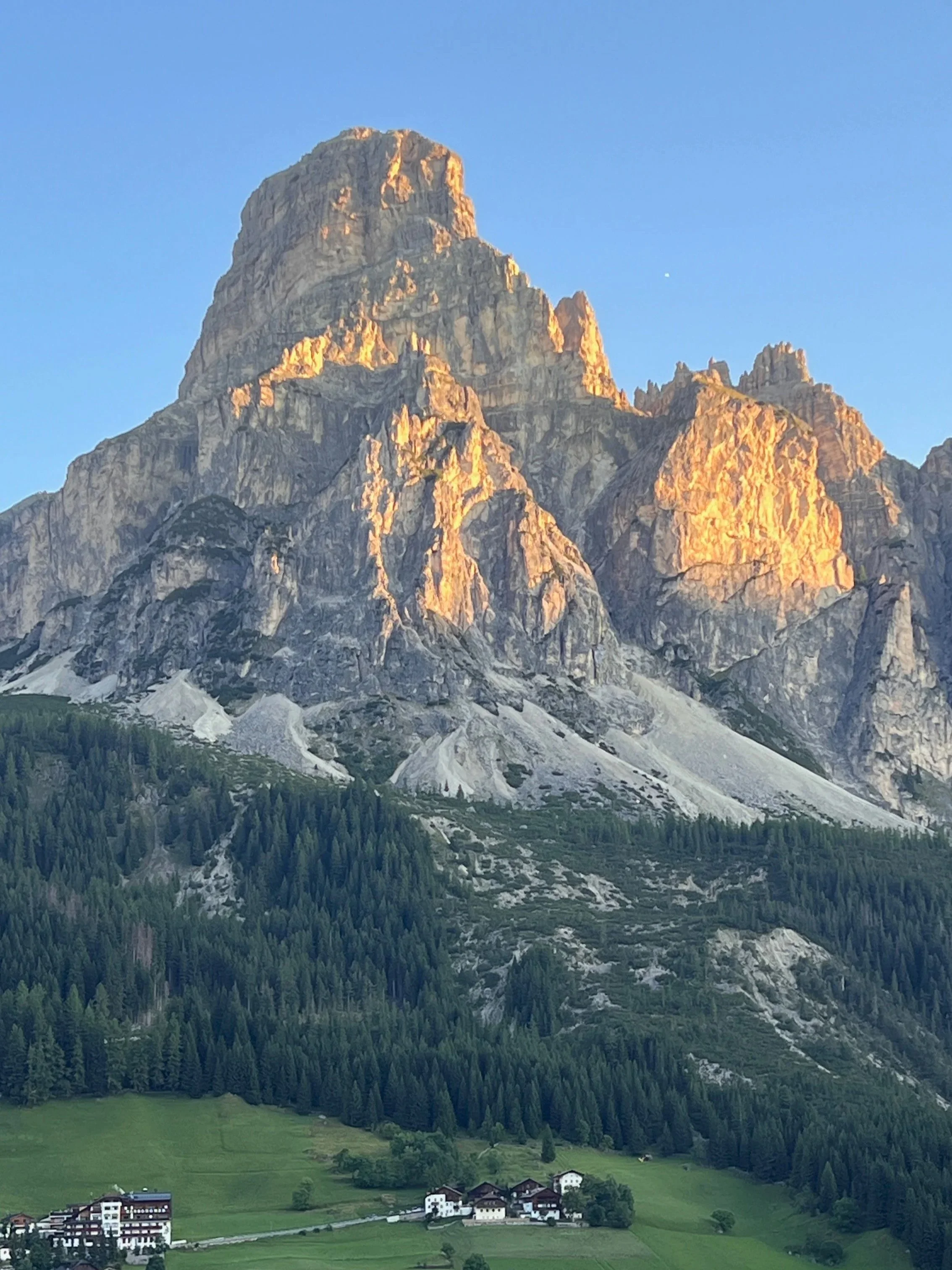
Choosing the wrong base is the fastest way to make a Dolomites trip feel exhausting.
I see it repeatedly. People pick a town that looks central on a map, or choose somewhere because they've heard the name, and then spend half their holiday driving between valleys wondering why everything feels rushed. The mountains are enormous. The roads are slow. And each valley has a completely different character.
Your base town is the single most important decision you will make for a first Dolomites trip. Get it right and the whole holiday flows. Get it wrong and no amount of good weather or careful planning will fully fix it.
Here is what you need to know.
The Mistake Most First-Timers Make
They try to see too much.
The Dolomites look manageable on a map. In reality, driving between valleys takes far longer than it appears - mountain roads are narrow, winding, and shared with cyclists and other tourists stopping suddenly for photographs. What looks like a 30-minute drive on Google Maps often takes 50 minutes in practice.
Moving hotels every two nights to cover more ground sounds efficient. It rarely is. You spend your mornings packing, your afternoons unpacking, and your evenings in a place you haven't had time to get the feel of.
The better approach is to choose one excellent base, spend at least three nights there, and use it as the anchor for day trips in different directions. You will see more, stress less, and actually remember the trip.
For a clearer sense of how distances work in practice, read my Dolomites Driving Times post before you plan your itinerary.
Ortisei, Val Gardena
Ortisei is the town I recommend most often to first-time visitors and there is a clear reason for that. It has exceptional lift access directly from the town centre - both Seceda and Alpe di Siusi are reachable without a car - a beautiful pedestrianised centre with good restaurants and shops, and a relaxed, unhurried pace that suits people who want to enjoy the mountains without constant logistics.
Val Gardena as a whole is the most lift-rich valley in the Dolomites. From Ortisei alone you can reach two of the best high-altitude areas in the region. Add a car and the Sella Ronda passes, Sass Pordoi, and multiple other highlights are all within comfortable reach.
Ortisei suits you if you want easy lift access, a proper town to come back to in the evenings, and the flexibility to explore in multiple directions. It is probably the safest choice for a first trip.
For more detail on the Val Gardena towns and how they compare, read my Is Val Gardena a Good Base post. And if you are planning walks in the area, my free guide covers 5 of the best lift-accessible routes in Val Gardena.
Download the free Val Gardena hiking guide
Corvara, Alta Badia
Corvara is my other top recommendation for first-timers - particularly for people who want a quieter, more refined experience and exceptional food.
Alta Badia has some of the best restaurants and rifugi in the Dolomites. The Ladin cuisine here - spinach dumplings, venison goulash, apple strudel, local wine - is genuinely special. Corvara itself is a small, pretty village with a relaxed atmosphere and excellent lift access to the Sella Group and the Pralongià plateau.
The position is very central. Passo Gardena, Passo Sella, Passo Campolongo, and Passo Valparola are all within easy reach, making Corvara one of the best bases for scenic drive days. Seceda is about 45 minutes away by car - perfectly manageable as a day trip.
Corvara suits you if you want good food, a calm atmosphere, and easy access to the central passes. It is a slightly more grown-up choice than Ortisei and tends to attract people who want quality over activity.
For more detail on Corvara and the Alta Badia area, read my Alta Badia for First-Timers guide.
Cortina d'Ampezzo
Cortina is the most famous name in the Dolomites and the scenery around it is extraordinary. The Ampezzo basin is ringed by dramatic peaks and the lift access - particularly Lagazuoi and Cinque Torri - is excellent for non-hikers.
It is also the most expensive base in the region and the busiest in peak season. The town itself is glamorous and well-equipped but can feel hectic in July and August. Parking is difficult and prices for hotels and restaurants are noticeably higher than elsewhere.
Cortina suits you if you want a classic alpine town experience, don't mind paying more for it, and are visiting outside the peak summer weeks. It is less well-positioned for the central passes than Ortisei or Corvara but the eastern Dolomites around it are spectacular.
Sesto or San Candido (3 Peaks Area)
The eastern Dolomites around Sesto and San Candido are the most relaxed part of the region. The pace here is slower, the crowds are thinner, and the landscape has a different character - more wooded valleys and lakes, with the dramatic Tre Cime di Lavaredo and Val Fiscalina as the headline attractions.
This area suits people who want a gentler, less structured trip - long walks to beautiful lakes, quiet rifugi lunches, evenings in an unhurried village. It is less lift-dependent than the central Dolomites and better suited to people who enjoy gentle walking or scenic driving rather than cable car days.
Lago di Braies is about 30 minutes away and is one of the most beautiful lakes in the Alps. The Tre Cime road, one of the most dramatic drives in the Dolomites, starts nearby.
What Your Base Determines
Where you sleep shapes more of your trip than most people realise. It determines how early you can start each day without a long drive, what your evening options are, how much time you spend in the car versus in the mountains, and the overall rhythm and feel of the holiday.
A base with good lift access from the town means you can be at altitude in 20 minutes. A base that requires driving to everything adds an hour or more to every day - and that adds up quickly over a 5 or 7 day trip.
If you are worried about structuring your days so nothing feels rushed, my free guide covers exactly how to pace a Dolomites trip so every day feels enjoyable rather than exhausting.
Download the free Dolomites Without the Rush guide
Still Unsure?
This is the most common question I get and also the most important one to answer correctly. My free base guide compares the main areas side by side - Val Gardena, Alta Badia, Cortina, and the 3 Peaks - with honest notes on who each one suits and who it doesn't.
Download the free Choose Your Base guide
If you want a personalised recommendation based on your specific dates, group, and priorities, that is exactly what my trip planning service is for.
More Useful Reading
For help understanding how the different areas of the Dolomites connect, read How Far Apart Things Really Are in the Dolomites.
For the best easy viewpoints near each base, read Dolomites for Non-Hikers.
For spa hotels and wellness-focused stays, read Dolomites for Spa Lovers.
For a detailed breakdown of all the main regions, download my free region guide.
